03 Sep
TikTok Shop is opening up a new route into Europe for eligible UK sellers. Here’s what the new Sell Across EU programme could mean for retailers looking to expand internationally.
For UK ecommerce sellers, international expansion can be an exciting prospect.
More markets. More customers. More opportunities to grow.
But there is a difference between being able to sell somewhere and being ready to sell there successfully.
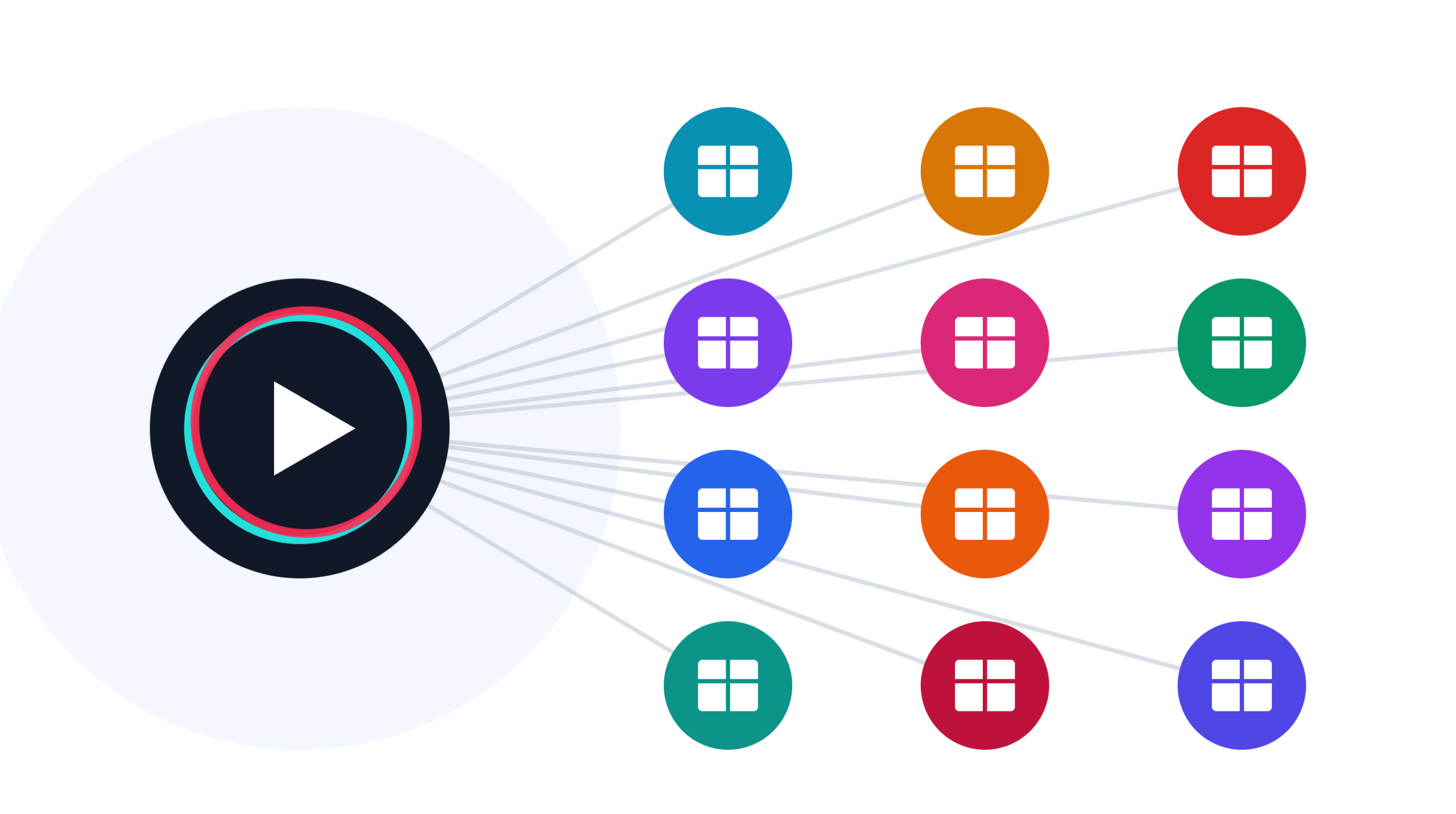
That distinction is particularly relevant as TikTok Shop prepares to launch Sell Across EU, a new programme that will allow eligible UK sellers to expand their TikTok Shop operations into 12 European markets.
With an early pilot beginning in September and wider availability planned for October, sellers have a relatively small window to think about what expansion could actually look like for their business.
Because adding 12 markets doesn’t just mean adding 12 places to sell.
It means adding complexity.
What is TikTok Shop Sell Across EU?
TikTok Shop’s Sell Across EU programme is designed to make it easier for eligible UK sellers to reach customers across Europe.
The programme will initially cover 12 EU markets:
- Germany
- Italy
- France
- Spain
- Poland
- The Netherlands
- Belgium
- Czech Republic
- Austria
- Greece
- Portugal
- Hungary
TikTok has announced that a selected group of sellers will be invited to participate in an early pilot from 21 September 2026, with the programme scheduled to become available to eligible sellers from 19 October 2026.
For sellers that have already established a successful TikTok Shop presence in the UK, this represents a potentially significant opportunity to take that business into new markets.
And importantly, sellers won’t need to build an entirely separate operation for every country.
TikTok says UK and EU shops can be managed through the same Seller Center interface.
But that doesn’t mean the two operations are identical.
One platform, different markets
While TikTok is making the management of UK and EU selling more connected, sellers still need to account for differences between markets.
TikTok states that payments, settlements and local promotions are handled separately, while seller performance and account health are assessed independently for UK and EU operations.
That’s an important detail.
International expansion isn’t simply a case of copying your UK catalogue and waiting for European orders to arrive.
There are commercial, operational and regulatory differences to consider.
And those differences become more significant as the number of products and markets increases.
Who is eligible?
Sell Across EU isn’t automatically available to every UK TikTok Shop seller.
TikTok says eligibility is based on factors including the seller’s current account status and performance.
Among the requirements, sellers need to be active UK TikTok Shop sellers, have their account in good standing and have recorded sales within the previous 30 days. They must also not have a significant negative balance.
Eligible sellers will receive further communication from TikTok when Sell Across EU becomes available to their shop.
For sellers who are hoping to take part, however, there is value in preparing before that invitation arrives.
The opportunity comes with responsibilities
Selling into a new market always brings additional responsibilities, and TikTok’s guidance makes it clear that EU expansion is no exception.
One of the biggest areas sellers need to consider is product compliance.
TikTok advises sellers to make sure they have the relevant regulatory certifications and documentation required for their destination markets.
Depending on the products being sold, this can include requirements relating to:
- General Product Safety Regulation (GPSR)
- Extended Producer Responsibility (EPR)
- Electronics
- Toys
- Baby products
- Cosmetics
- Textiles
- Other regulated product categories
The important point is that compliance shouldn’t be treated as something to sort out after a product has already been listed.
For retailers with a large catalogue, identifying which products require additional information or documentation — and keeping that information accurate — can quickly become a significant data-management exercise.
Then there’s fulfilment
Selling to customers in another country introduces another set of considerations.
For Sell Across EU orders, TikTok says Ship by TikTok is the default shipping option for cross-border EU orders. Sellers who want to use Ship by Seller need to request access through an Account Manager and be approved by TikTok.
That distinction is important for UK sellers planning their European expansion.
With Ship by TikTok, TikTok organises the shipment using its third-party carrier network, while sellers still need to make sure orders are prepared and handed over within the required timeframes. For Sell Across EU orders, TikTok states that packages must be handed to the carrier within seven working days, with a two-working-day requirement applying to Ship by TikTok orders.
So fulfilment planning isn’t simply about deciding which courier you want to use.
Sellers need to understand which shipping options are available to them, what approval is required, where their stock will be held and whether their existing fulfilment operation can reliably meet TikTok Shop’s delivery requirements.
And fulfilment doesn’t end when the parcel reaches the customer.
Don’t forget returns
Returns can become considerably more complicated when you’re selling across borders.
TikTok says UK sellers sending orders to EU customers need an EU location for returns.
If a seller doesn’t have an EU return warehouse, TikTok says returned products may instead be sent to a TikTok Shop return warehouse, with processing costs charged to the seller.
For retailers considering European expansion, returns therefore need to be part of the plan from the beginning.
The real challenge may be your product data
For many sellers, compliance and fulfilment will be obvious considerations.
But there is another challenge that can be easier to overlook:
data.
Imagine you’re a UK retailer with 2,000 products already selling successfully on TikTok Shop.
Now imagine making those products available across 12 European markets.
You need to consider:
Products
Which products should be available in which markets?
Inventory
How much stock is available, and where is it located?
Pricing
Should the same product have the same price across every market?
Currency
How will prices be converted and maintained?
Product information
Is the information required for each market complete and accurate?
Compliance
Are the relevant documents and attributes available for the products being sold?
Orders
Where do European orders go once they have been placed?
Fulfilment
How are orders picked, packed, shipped and tracked?
Returns
Where do products go if a customer sends them back?
That’s a lot of moving parts.
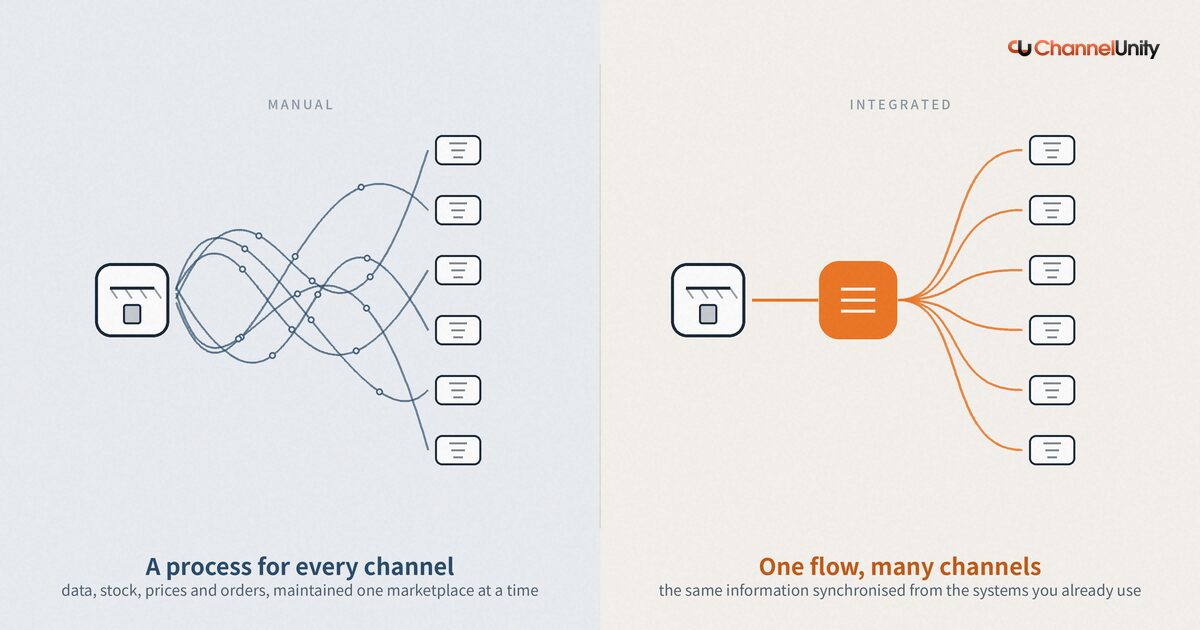
And while managing them manually might be possible when you’re dealing with a handful of products and orders, the complexity increases rapidly as you add more products, more orders and more countries.
This is where automation becomes important
TikTok Shop’s European documentation already recognises the role of integration partners within the Sell Across EU model.
That makes sense.
The purpose of marketplace integration isn’t simply to connect a retailer to another sales channel.
It’s to help create a consistent flow of information between the systems that run the business and the marketplaces where products are being sold.
When a product changes, the relevant information needs to reach the right marketplace.
When stock changes, the available inventory needs to stay accurate.
When a price changes, sellers need to know where that change needs to be reflected.
And when an order arrives, it needs to make its way into the retailer’s existing fulfilment process.
The more marketplaces and markets a retailer operates across, the more difficult that becomes to manage manually.
The goal isn’t to eliminate the complexity of international ecommerce. It’s to stop that complexity creating unnecessary manual work.
How should UK sellers prepare?
If you’re an eligible TikTok Shop seller considering Sell Across EU, now is a good time to start preparing.
1. Review your catalogue
Decide which products actually make sense for European customers.
You don’t necessarily need to launch every product in every market on day one.
2. Audit your product data
Check that your product information is complete, accurate and ready for use beyond the UK.
Look particularly closely at attributes, identifiers, descriptions and any information required for compliance.
3. Review inventory
Think about where your stock is held and how it will be allocated between UK and European sales.
If multiple markets are drawing from the same inventory pool, accurate stock synchronisation becomes particularly important.
4. Think about pricing
International selling can introduce currency differences, additional shipping costs and different commercial considerations.
Consider whether your pricing strategy needs to vary between markets.
5. Plan fulfilment and returns
Make sure you understand your delivery routes and the requirements for each destination.
And don’t leave returns until you’ve already made your first European sale.
6. Review your systems
Finally, ask yourself a simple question:
If your TikTok Shop orders suddenly increased across 12 additional markets, could your current systems cope?
If the answer involves a lot of spreadsheets, manual uploads and repeated data entry, expansion could create considerably more work for your team.
That’s worth addressing before the additional orders arrive.
A bigger opportunity — if you’re ready for it
TikTok Shop’s Sell Across EU programme represents an exciting opportunity for UK sellers.
Twelve new European markets could mean access to a much larger customer base without having to build a completely separate TikTok Shop presence from scratch in every country.
But international growth isn’t just about opening the door.
It’s about being ready for what happens when customers walk through it.
Products need to be right. Stock needs to be accurate. Prices need to make sense. Orders need to move efficiently. Compliance needs to be covered. Returns need somewhere to go.
And the systems behind all of that need to keep up.
For sellers who get those foundations right, Sell Across EU could become much more than another TikTok Shop feature.
It could become a genuine route to international growth.
Because expanding into Europe should mean more opportunities — not 12 new spreadsheets.