06 Aug

Ecommerce is entering a new phase.
For many retailers, the biggest opportunity is no longer simply acquiring more customers. It is increasing the value of the customers they already have.
As competition increases and customer acquisition costs continue to rise, repeat purchasing is becoming a more important driver of sustainable ecommerce growth. Customers are increasingly comfortable buying online regularly, whether they are replenishing everyday essentials, replacing products they trust or returning to brands that deliver a reliable experience.
Research from ECDB highlights this shift towards more frequent online purchasing behaviour, showing that the future growth of ecommerce will increasingly be shaped by how effectively retailers can encourage and support repeat buying.
For ecommerce leaders, this creates a new challenge.
Customer retention is no longer just a marketing responsibility. It is also an operational one.
The brands that succeed will be those that can deliver a consistent, reliable experience every time a customer interacts with them—across every marketplace, website and sales channel.
That requires a strong omnichannel foundation.
Repeat Customers Depend on Consistent Experiences
A customer’s second purchase is often harder to earn than their first.
A retailer may win a customer through a marketplace, but whether that customer returns depends on the experience that follows.
Was the product information accurate?
Was stock available when promised?
Was the order delivered correctly and on time?
Small operational failures can have a significant impact on customer confidence.
For retailers selling across multiple marketplaces, delivering this consistency becomes increasingly complex. Each additional channel introduces more listings to manage, more inventory feeds to maintain and more opportunities for errors.
This means customer loyalty increasingly depends on operational excellence behind the scenes.
The Rise of Repeat Purchase Categories
Some ecommerce categories naturally lend themselves to repeat purchasing.
Products that customers regularly consume, replace or replenish are creating some of the strongest opportunities for recurring revenue models.
Research from ECDB identifies several fast-growing categories towards 2030, including household products, food, meal kits and other everyday-use products where customers have a natural reason to return.
However, repeat purchasing is not limited to consumable categories.
Fashion, electronics, garden, DIY, sports and other sectors can also benefit from customer loyalty when retailers create a dependable experience across every touchpoint.
The opportunity is not simply about selling more products.
It is about making the next purchase easier.
The Marketplace Experience Is Part of Your Brand
A customer may first purchase through Amazon, return through eBay, browse through a retailer’s website or discover new products through another marketplace.
To the customer, these are all brand interactions.
They expect product information to be accurate, availability to be reliable and service levels to remain consistent regardless of where they purchase.
This changes the role of marketplaces.
They are no longer simply additional revenue channels. They are part of the overall customer relationship.
Why Automation Will Separate Growing Retailers from Struggling Ones
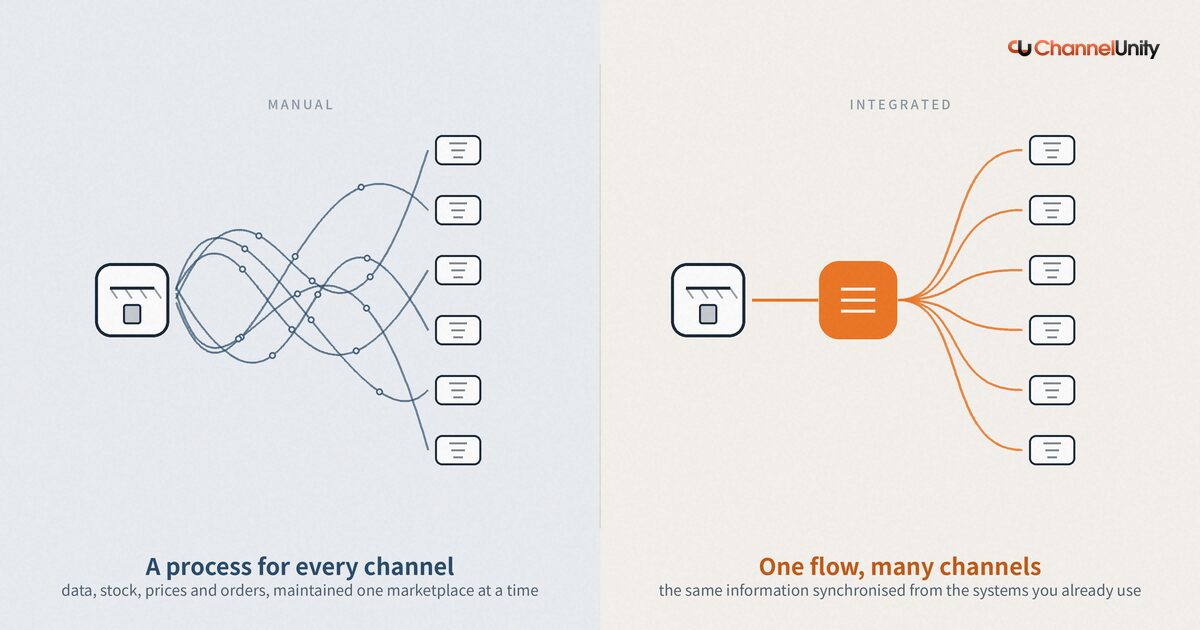
As retailers expand across more channels, manual marketplace management becomes increasingly difficult to maintain.
Disconnected systems can create:
- Different product information across channels.
- Incorrect stock availability.
- Pricing inconsistencies.
- Delays launching products into new marketplaces.
- Increased operational workload.
These problems directly affect the customer experience.
Marketplace automation allows retailers to connect their ecommerce platforms and sales channels, ensuring that product data, inventory, pricing and orders remain synchronised.
The result is not just greater efficiency.
It is the ability to scale while maintaining the consistency customers expect.
The Future of Ecommerce Will Be Connected
By 2030, successful ecommerce businesses will not simply be those selling on the greatest number of channels.
They will be the businesses that make every channel work together.
Repeat purchasing depends on trust. Trust depends on consistency. And consistency becomes increasingly difficult without the right technology foundation.
At ChannelUnity, we help retailers connect ecommerce platforms with leading marketplaces, automating product listings, inventory, pricing and order management from one central platform.
Because the future of ecommerce is not just about reaching more customers.
It is about creating experiences that bring them back.
Research Referenced: This article draws on insights from ECDB’s research, “Recurring Purchases Are Reshaping the Future of E-Commerce“, which explores how repeat purchasing behaviour is influencing the future direction of online retail.